
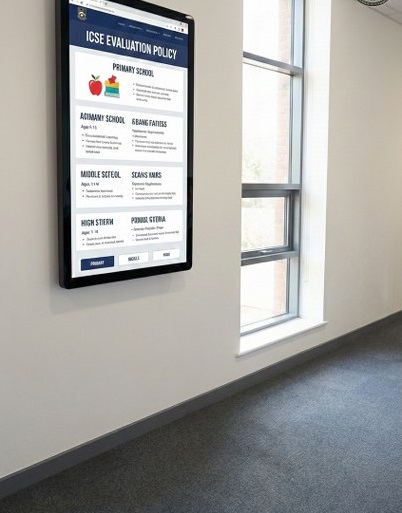

Evaluation Structure Policy

Academics

Evaluation Structure Policy

  • Foundation Stage
  • Preparatory Stage
  • Middle Stage
  • Secondary Stage
...
...
Evaluation Structure Policy

Foundation Stage

The Evaluation Structure Policy for the Foundation Stage is designed to promote holistic development and joyful learning among young learners. In accordance with the philosophy and guidelines of the Council for the Indian School Certificate Examinations, assessment at this stage is continuous, comprehensive, and child-centric rather than examination-driven.

Evaluation focuses on observing each child’s growth across key developmental domains—cognitive, language, social-emotional, physical, and creative development. Teachers use a variety of age-appropriate tools such as observation records, anecdotal notes, portfolios, class activities, worksheets, and project work to assess progress. Emphasis is placed on understanding concepts, participation, curiosity, communication skills, and collaborative behavior rather than rote learning.

Formal written examinations are not conducted at the Foundation Stage. Instead, continuous and informal assessments help identify individual strengths and areas requiring support. Regular feedback is shared with parents through meetings and progress reports to ensure collaborative monitoring of the child’s development.

The evaluation process encourages positive reinforcement, builds confidence, and nurtures a love for learning. By maintaining a stress-free and supportive assessment system, the Foundation Stage ensures that every child develops foundational skills, self-esteem, and readiness for the next level of academic growth.
 

...
...
...
Evaluation Structure Policy

Preparatory Stage

The Evaluation Structure Policy for the Preparatory Stage is designed to support structured academic growth while maintaining a balanced and stress-free learning environment. In alignment with the guidelines of the Council for the Indian School Certificate Examinations, the assessment system emphasizes conceptual clarity, skill development, and continuous progress monitoring.

At this stage, evaluation is both formative and summative in nature. Formative assessments include class participation, oral work, projects, assignments, practical activities, and periodic class tests. These ongoing assessments help teachers identify learning gaps and provide timely remedial support. Summative assessments are conducted at the end of each term to evaluate students’ understanding of key concepts across subjects.

The evaluation process focuses not only on academic performance but also on communication skills, creativity, problem-solving abilities, and collaborative learning. Constructive feedback is regularly shared with students and parents through report cards and parent-teacher meetings, encouraging joint responsibility in the child’s progress.

Grading is transparent, fair, and structured to motivate learners to improve consistently. Emphasis is placed on application-based learning rather than rote memorization. Through this comprehensive evaluation framework, the Preparatory Stage ensures that students build a strong academic foundation, develop confidence, and prepare effectively for higher classes.
 

...
...
...
...
...
...
...
Evaluation Structure Policy

Middle Stage

The Evaluation Structure Policy for the Middle Stage is designed to strengthen academic rigor while fostering analytical thinking and independent learning. In accordance with the standards of the Council for the Indian School Certificate Examinations, the assessment system is structured to ensure comprehensive evaluation of knowledge, skills, and values.

Assessment at this stage includes both formative and summative components. Formative assessments comprise class tests, assignments, subject enrichment activities, projects, practical work, presentations, and regular classroom participation. These continuous evaluations help teachers monitor progress, identify learning gaps, and provide timely academic support. Summative assessments are conducted periodically through term examinations that assess conceptual understanding, application skills, and problem-solving abilities.

The evaluation framework emphasizes critical thinking, written and oral communication, creativity, and collaborative learning. Equal importance is given to co-curricular performance, discipline, attendance, and life skills development. Transparent grading practices and structured marking schemes ensure fairness and clarity.

Regular feedback is provided to students and parents through report cards and parent-teacher meetings, promoting shared responsibility for academic improvement. By integrating continuous assessment with structured examinations, the Middle Stage Evaluation Policy prepares students for higher academic challenges while encouraging responsibility, self-discipline, and consistent academic excellence.
 

...
...
...
Evaluation Structure Policy

Secondary Stage

The Evaluation Structure Policy for the Secondary Stage is designed to uphold academic excellence while preparing students for board-level assessments. In alignment with the guidelines of the Council for the Indian School Certificate Examinations, the evaluation framework ensures a balanced and comprehensive assessment of knowledge, skills, and overall development.

Assessment at this stage includes a combination of formative and summative evaluations. Formative assessments comprise periodic tests, subject-based projects, practical work, assignments, presentations, and internal assessments. These continuous evaluations help strengthen conceptual clarity, analytical thinking, and application-based learning. Summative assessments are conducted through half-yearly and annual examinations, structured in accordance with ICSE examination patterns to familiarize students with board standards.

Practical examinations and internal assessments are conducted in subjects such as Science, Computer Applications, and Environmental Studies, as per ICSE norms. Emphasis is placed on critical thinking, written expression, time management, and accuracy.

Transparent grading policies, detailed marking schemes, and timely feedback ensure fairness and clarity in evaluation. Regular parent-teacher meetings provide updates on academic progress and areas for improvement.

Through this structured and systematic evaluation process, the Secondary Stage equips students with the confidence, discipline, and competence required to excel in the ICSE Board Examinations and beyond.
 

...
...
...
...
...